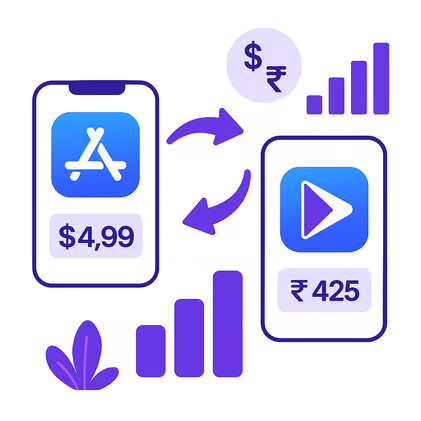
In today’s highly competitive app marketplace, revenue generation requires more than a single strategy. As consumer behaviors shift and emerging trends like hybrid monetization gain momentum, app developers and publishers are presented with an opportunity to maximize their revenue streams. But how can you effectively implement and balance hybrid monetization strategies?
This article breaks down the concept of hybrid monetization, explores actionable strategies to monetize both paying and non-paying users, and highlights best practices for ad integration that enhance user experience without compromising retention. If you're a mobile app founder, indie developer, or monetization manager eager to scale your app globally while optimizing your revenue streams, this guide is for you.
Hybrid monetization is the strategic combination of multiple revenue streams - like subscriptions, in-app purchases (IAPs), and integrated ads - within a single app to boost profitability. While historically, apps relied on either a subscription/IAP model or ad-based monetization, hybrid approaches seek to bridge the gap by leveraging the strengths of both models.
Why is hybrid monetization gaining traction? Post-pandemic app trends reveal that, on average, only 5% of app users generate revenue through subscriptions or IAPs, leaving 95% of users untapped. Hybrid monetization allows developers to unlock value from non-paying users while maintaining a positive experience for paying customers.
To implement a high-performing hybrid monetization strategy, it's essential to balance user experience with revenue optimization. Here are the key components to consider:
Understanding your user base is the foundation of hybrid monetization. Not all users behave the same way, and identifying distinct user segments - such as paying versus non-paying users - enables tailored strategies.
Ad formats should complement the app’s user flow and aesthetic. The key is to avoid intrusive ads that disrupt engagement. Examples of effective ad formats include:
The placement and timing of ads are crucial to maintaining user satisfaction. For example:
A critical part of hybrid monetization is testing and iterating. Run A/B tests to determine the best ad formats, placements, and frequency for your audience. Use tools like Google Analytics or Firebase to measure key performance indicators (KPIs) like retention, session length, and user lifetime value (LTV).
Poor-quality ads can negatively impact user retention. Ads with deceptive close buttons, forced redirects, or prolonged interruptions lead to user frustration and churn. Prioritize user-first ad designs that allow smooth interactions and provide clear controls for closing ads.
A notable example of hybrid monetization in action is seen within the growing trend of drama shorts, particularly in the Asia-Pacific (APAC) region. These apps offer serialized video content, similar to TikTok but focused on episodic storytelling.
Let’s take the example of a hypothetical user journey:
By strategically balancing subscription and ad-supported revenue, the app maximizes both Gabby’s retention and its earnings.
To implement hybrid monetization effectively, follow these industry best practices:
Avoid bombarding users with ads, especially during their first interactions with the app. Aim for a harmonious experience where monetization feels natural, not intrusive.
Use analytics tools to segment users and tailor monetization strategies based on behavior, location, and demographics. Personalized approaches often yield higher LTV.
Stay informed about industry trends and experiment with innovative formats like rewarded ads or app open ads. For example, the drama shorts trend highlights how niche content can pair seamlessly with hybrid monetization.
Incorporate high-quality, non-disruptive ads that respect user expectations. Ensure ads are easy to close and avoid practices like forced redirects or deceptive buttons.
If you manage multiple apps, use cross-promotion to drive engagement across your portfolio. For example, redirect users from one app to another through in-app ads to prolong their lifetime value.
Hybrid monetization represents the future of app revenue strategies, offering a balanced approach to converting both paying and non-paying users into valuable contributors to your bottom line. By focusing on data-driven segmentation, ad quality, and user experience, developers and monetization managers can unlock new revenue streams while fostering sustainable growth.
The hybrid approach is more than just a trend - it’s a business imperative for apps aiming to scale globally in today’s dynamic market. With the right tools, testing, and strategies, your app can thrive in the hybrid monetization era.
Source: "Hybrid monetization strategies for subscription apps" - SubHub by Adapty, YouTube, Jan 1, 1970 - https://www.youtube.com/watch?v=0LTIqlAkSS0