Setting regional app prices isn’t just about currency conversion - it’s about aligning with global purchasing power and user expectations. Apple App Store, Google Play, and Stripe each offer distinct pricing systems, from Apple’s structured tiers to Google’s flexible regional adjustments and Stripe’s usage-based billing. Here’s the breakdown:
Key Insight: Apps like Duolingo and Flo Health have doubled subscriptions or boosted conversions by tailoring prices for emerging markets, proving that local pricing matters. Tools like Mirava help fine-tune strategies, while platforms like RevenueCat manage billing and paywalls.
Takeaway: Choose your platform based on your product and pricing needs - Apple for simplicity, Google for flexibility, and Stripe for complex billing. For multi-platform apps, pricing intelligence tools can bridge gaps for consistent global strategies.

Apple App Store vs Google Play vs Stripe: Pricing System Comparison
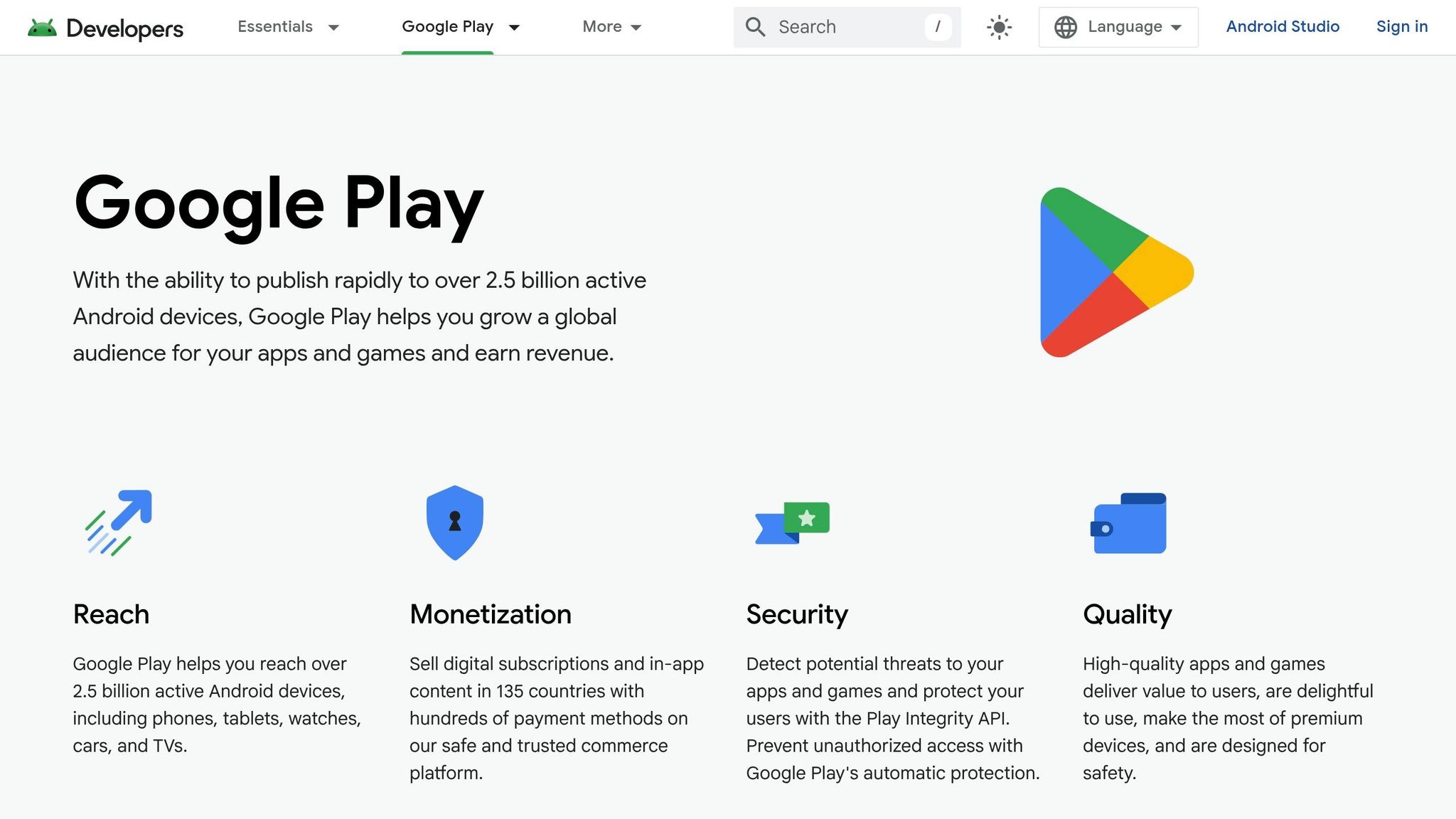
Google Play offers a pricing model that allows developers more flexibility compared to platforms with fixed tiers. Developers set a base price in their home currency, and the platform automatically converts this into over 70 local currencies [3]. However, since October 27, 2025, Google has removed pricing templates, requiring developers to adjust prices individually or use bulk management tools [4].
Another notable feature is its allowance for prices below one dollar in 20 markets across Latin America, EMEA, and APAC. This enables developers to align prices with local purchasing power, which is especially beneficial in regions with lower income levels.
This approach provides developers with a way to fine-tune pricing strategies for different regions.
A common practice among developers is to use a three-tier pricing strategy:
For instance, India, Brazil, and Indonesia together account for 45% of all Google Play downloads as of 2026 [3]. Duolingo serves as a great example of this strategy in action. While the app charges $12.99 per month in the USA, it adjusts pricing aggressively in other regions - ₹549 (about $6.50) in India and R$24.90 (around $5.00) in Brazil. This localized pricing helped drive a 400% surge in paid subscriptions from emerging markets, with India becoming its second-largest market [3].
Google Play continuously updates exchange rates and applies local pricing conventions, such as rounding to .99, to align with consumer expectations [3][5]. The platform also supports native price A/B testing, enabling developers to run and measure mobile app pricing experiments on various base prices and subscription lengths.
"Android users in emerging markets have lower average income than iOS users. A price that works on iPhone often bombs on Android." – M.C. Aksoy, Founder of Regional Price Calculator [3]
When Google Play introduces support for a new currency, it automatically calculates prices based on the developer's default price, current exchange rates, and local pricing norms [5]. To simplify multi-region pricing, tools like Mirava analyze purchasing data and synchronize optimized prices with platforms such as RevenueCat, Adapty, Purchasely, and Superwall.
Apple takes a more structured approach to pricing compared to the flexibility of Google Play.
Apple employs a fixed pricing tier system, requiring developers to choose from predefined options for apps, in-app purchases (IAPs), and subscriptions [6]. The App Store offers up to 800 price points by default, with the possibility to request an additional 100 tiers that extend pricing up to $10,000 [7][8]. This system includes 200 tiers dedicated to subscriptions and 94 tiers for apps and IAPs [6]. To address affordability in lower-income regions, Apple provides "Alternate Tier A" and "Alternate Tier B" pricing. For instance, while the standard Tier 1 price in China is ¥6.00, Alternate Tier A reduces it to ¥1.00, making apps more accessible in these markets [6].
"All developers must choose from a broad selection of App Store pricing tiers that determine in-app purchase costs. While these tiers don't provide the same level of flexibility as the pricing policies on Google Play, they come with certain benefits that help iOS apps operate more effectively in the global app marketplace." – Ted Verani [6]
Apple supports regional pricing adjustments in over 175 markets, allowing developers to set different prices for each country or region directly through App Store Connect without requiring app updates [9]. However, automatic pricing recommendations can sometimes miss the mark when it comes to aligning with local purchasing power. This often requires setting up purchasing power parity pricing to ensure global affordability. For example, while Apple suggests a 26% price increase for the United Kingdom compared to U.S. rates, many developers instead set UK prices about 10% lower than the U.S. baseline [2].
A good example of the impact of regional pricing comes from Flo Health Inc., which adjusted prices in Brazil to better match local conditions. This strategy made Brazil their third-largest market, all while maintaining profitability due to lower advertising costs [2]. Similarly, Duolingo charges higher prices in Spain and France than in the U.S., reflecting the perceived value of English language skills for career advancement in these regions [2].
"If your conversion rate in India is five times lower than in Canada, Australia, or US, well, there's some mismatch, right?" – Jacob Rushfinn, Founder, Rushfinn Consulting [2]
Apple's pricing system relies on a "base country or region" selected by developers. From this base, Apple automatically calculates equivalent prices across 174 storefronts and 43 currencies, updating periodically to account for exchange rates and taxes [7][8]. Instead of real-time USD conversions, Apple assigns fixed values for each pricing tier in every supported currency, ensuring stable prices despite minor market fluctuations [6]. Local pricing conventions, such as rounding to .99, are also applied. For instance, a conversion resulting in ₱202.33 would be adjusted to ₱199 [1]. Developers' revenues can vary depending on local taxes; for example, a Tier 10 purchase priced at €10.99 in Europe might yield €6.58 in Luxembourg but €6.20 in Finland [6].
Apple's automatic pricing adjustments help developers maintain consistent global earnings, reduce pricing errors, and discourage customers from shopping across storefronts for lower prices [7]. For those who need more control, manual adjustments for specific regions are also an option [7].
"Automatic price updates help your global earnings stay consistent, customers aren't incentivized to seek lower prices on certain storefronts, and pricing mistakes are reduced." – Apple Developer Help [7]
For developers juggling pricing across multiple platforms, tools like Mirava provide valuable insights. By analysing purchasing patterns, Mirava informs optimal regional pricing strategies. While Mirava focuses on pricing intelligence, partners like RevenueCat, Adapty, Purchasely, and Superwall handle billing and paywall implementation. This division of tasks ensures developers can fine-tune their pricing to match local market dynamics while relying on robust infrastructure for execution.
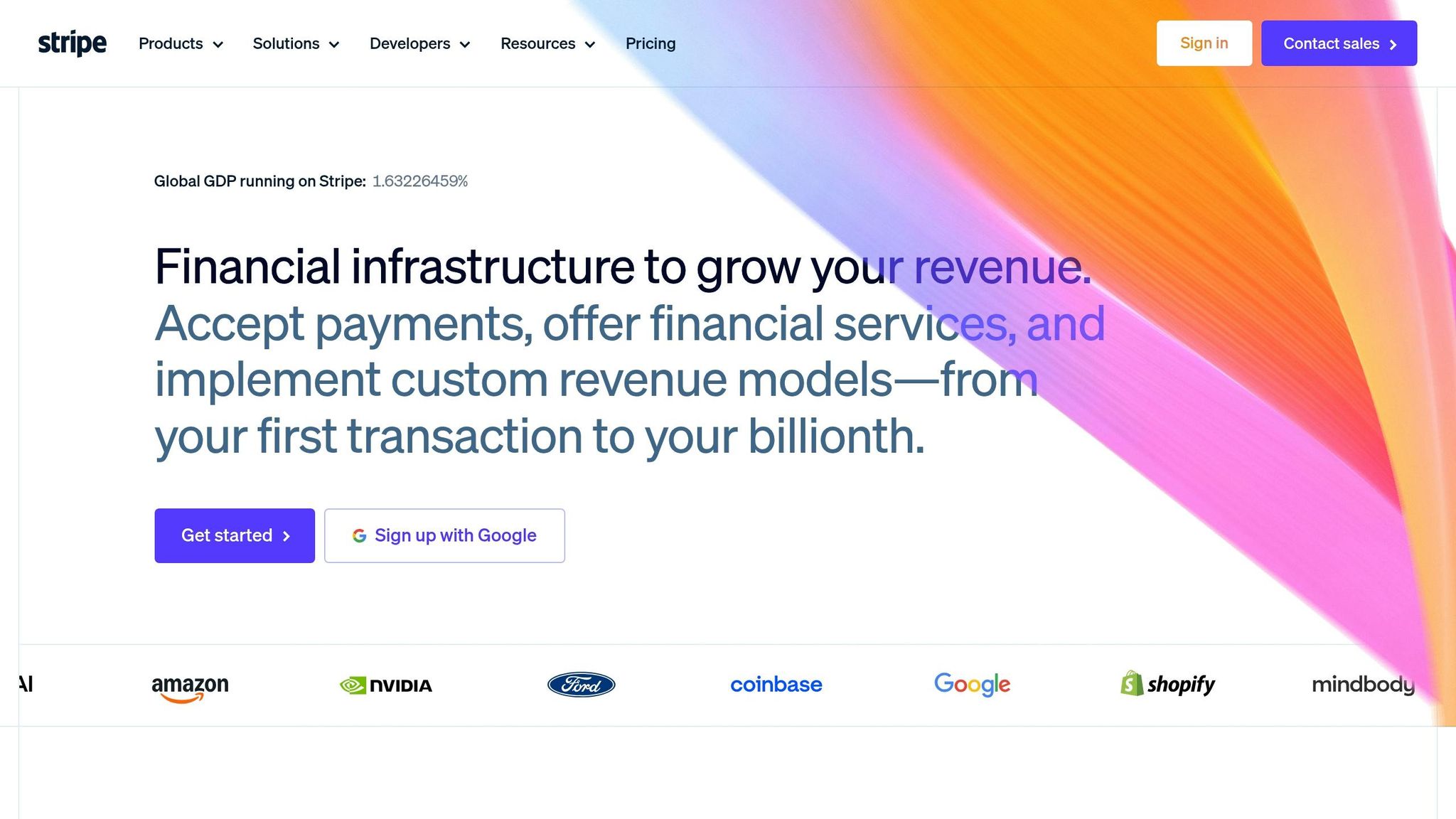
Unlike Apple and Google, which rely on predefined pricing tiers for regional adjustments, Stripe takes a different route with its focus on usage-based billing. This makes it particularly suited for SaaS products, API services, and other scenarios requiring metered billing. Instead of fixed price points, Stripe employs a model where the price adjusts based on a customer’s consumption level [10].
Stripe offers two main approaches to tiered pricing: Volume-based pricing and Graduated pricing.
Developers can further customize pricing by adding flat fees per tier, blending fixed and variable costs into a single structure.
Stripe supports payments in over 135 currencies across more than 150 countries [11]. Merchants can choose from three pricing strategies to address regional differences:
Stripe’s Adaptive Pricing also enables local payment methods, such as iDEAL for EUR transactions, Pix for BRL, and BLIK for PLN [12]. These tools allow businesses to either adjust prices based on local purchasing power or let Stripe handle the optimization automatically.
Stripe’s Adaptive Pricing leverages machine learning to determine the most relevant local currency for customers, ensuring seamless localization. It calculates prices in real-time and guarantees exchange rates for 24 hours to provide stability during checkout [12]. A conversion fee of 2–4% is applied to the exchange rate, eliminating the need for additional merchant fees [14, 15].
For businesses requiring more control, Stripe’s FX Quotes API allows locking exchange rates for durations of 5 minutes, 1 hour, or 24 hours. However, these quotes expire if the rate fluctuates by more than 3.5% [13].
Adaptive Pricing simplifies global pricing by automating conversion without requiring code, while the FX Quotes API offers a more hands-on approach for developers [13]. For mobile app developers juggling Stripe alongside Apple and Google pricing systems, managing consistency across 175+ regions can be a daunting task. This is where pricing intelligence platforms like Mirava come into play. Positioned upstream of tools like RevenueCat, Adapty, Purchasely, and Superwall, Mirava helps developers craft optimal regional pricing strategies. This often involves testing regional pricing through A/B experiments to find the right balance for each market. These tools then handle the operational aspects, such as billing, paywalls, and entitlements, streamlining the overall process. By contrast, mobile app stores’ fixed tier models highlight the flexibility Stripe offers in pricing management across platforms.
This section outlines the primary strengths and weaknesses of each pricing system, building on the platform-specific details discussed earlier.
Each platform balances control, cost, and convenience differently. The Apple App Store offers a highly streamlined experience, with 90% of app submissions reviewed within 24 to 48 hours [17], and its 900+ predefined pricing tiers simplify global pricing decisions. However, this convenience comes with trade-offs: developers face a 40% rejection rate for first-time submissions [17], pay commissions ranging from 15% to 30% [14], and lose significant flexibility.
"Developers trade control for access. App store rules can (and do) change according to Apple's and Google's changing policies" [14].
Google Play provides a more flexible alternative. Its $25 one-time registration fee [17] is far lower than Apple's annual $99–$299 cost [17]. Additionally, Google Play's legacy cohort mechanism allows developers to adjust prices regionally without forcing existing users to re-opt-in immediately [16]. However, this feature has its downsides - existing subscribers retain their original pricing unless they are manually migrated, adding complexity.
"The legacy cohort mechanism means changing a price in the Play Console does not automatically change what existing subscribers pay" [16].
Managing these cohorts requires developers to oversee migrations and test notification flows using license testers [16].
Stripe, on the other hand, takes a completely different approach. With transaction fees of approximately 2.9% + $0.30 [15], it offers a cost-effective solution for developers compared to app store commissions. It supports over 135 currencies across 195 countries [14] and is ideal for SaaS and API-driven products due to its usage-based and graduated pricing models. However, Stripe demands more from developers: they must build custom checkout flows, handle tax compliance, and manage currency conversion themselves. Unlike app stores, Stripe doesn't provide a "set and forget" experience.
| Platform | Key Strength | Key Weakness | Best For |
|---|---|---|---|
| Apple App Store | Streamlined checkout; 900+ tiers simplify pricing [14][17] | High fees (15–30%); rigid rules; 40% rejection rate [14][17] | Consumer apps that prioritize trust and ease |
| Google Play | Flexible regional pricing; gradual migration of cohorts [16] | Manual oversight required; opt-in price increases may lead to churn [16] | Developers focusing on emerging markets |
| Stripe | Low transaction fees; supports complex billing models [15] | Requires custom checkout and tax setup [15] | SaaS, web-based subscriptions, API services |
For developers working across multiple platforms, Mirava provides a way to fine-tune region-specific pricing using real purchasing data from over 170 countries. Once pricing is optimized, tools like RevenueCat, Adapty, Purchasely, and Superwall handle the operational aspects - billing, paywalls, and entitlement management. By combining Mirava’s pricing intelligence with these platforms' execution capabilities, developers can navigate the complexities of global pricing with greater precision. This comparison highlights the importance of leveraging strategic tools to manage the diverse demands of these systems effectively.
Different platforms follow unique approaches to price tiering. The Apple App Store focuses on simplicity, offering over 900 predefined price tiers. This structured system makes global launches straightforward but limits the ability to fine-tune pricing.
Google Play, on the other hand, allows developers to set region-specific prices or use auto-conversion based on a base price. While this flexibility is valuable, it requires more active management. Stripe caters to more complex billing needs, but developers must handle custom checkout flows and tax compliance on their own.
The right choice depends on your product and technical capabilities. Consumer apps often benefit from the seamless checkout experiences of app stores, while SaaS products might lean toward Stripe’s adaptability. Still, about 40% of brands stick to Apple and Google’s default pricing structures [2], potentially overlooking revenue gains in regions with diverse purchasing power.
"Regional pricing is one of the fastest, highest-ROI growth moves available today. You don't need a new feature - you need better economics." - Demian Voorhagen, RevenueCat [1]
Syncing prices across Apple and Google Play can be challenging. Tools like Mirava simplify this by automating purchasing power parity (PPP) adjustments and aligning custom prices to the closest platform tiers across over 170 countries. Once pricing is optimized, platforms like RevenueCat, Adapty, Purchasely, and Superwall handle payment processing, paywall management, and key metrics like lifetime value (LTV) and churn.
Ultimately, success lies in connecting pricing strategy with operational tools. Pricing intelligence determines the "what" and "where" of pricing, while subscription tools manage execution and performance tracking. Using both effectively enables developers to make the most of each platform’s pricing framework.
Apple's pricing tiers simplify the process by offering preset price points across 175 countries. While this approach ensures stability and ease of use, it limits flexibility for nuanced pricing strategies. On the other hand, Google’s regional pricing provides granular control, enabling developers to fine-tune prices for specific markets with immediate updates. Stripe stands out with its lower fees and complete billing control, though it requires additional effort to handle taxes and currency conversions.
For optimal results, consider integrating these platforms with tools like RevenueCat or Adapty to streamline subscription management. Pair this setup with Mirava's pricing intelligence to refine your regional pricing strategies and stay competitive in diverse markets.
To effectively set prices for emerging markets without affecting U.S. revenue, it's essential to use region-specific strategies that consider local purchasing power and user expectations. By tailoring prices to align with what users in these regions view as fair, localized pricing can boost international revenue by an impressive 250–350%. Leveraging tools like Mirava in combination with platforms such as RevenueCat, Adapty, Purchasely, and Superwall allows for global price adjustments that maintain U.S. pricing stability. This approach ensures affordability in lower-income regions while safeguarding revenue from high-spending markets.
To keep subscription pricing aligned across iOS, Android, and the web, it's crucial to leverage each platform's unique pricing controls. On iOS, Apple's fixed tier system simplifies the process by automating regional price conversions, though adjustments can sometimes take longer to reflect. In contrast, Android provides more granular control, allowing for immediate updates tailored to specific countries.
For a seamless approach, consider using a centralized pricing intelligence tool like Mirava. It can suggest the best regional price points to maintain consistency across platforms. Meanwhile, tools such as RevenueCat and Adapty manage billing, paywalls, and entitlements, ensuring smooth implementation across your subscription ecosystem.